

Choose post and rail if
- You have real acreage and a solid fence would look wrong on it
- You want the driveway or property line marked and nothing more
- You want an open wood fence for a long run
- You would add wire mesh later if a dog needs containing
Porch and stair safety
Clean, secure edges for stairs, porches, decks, and entries.
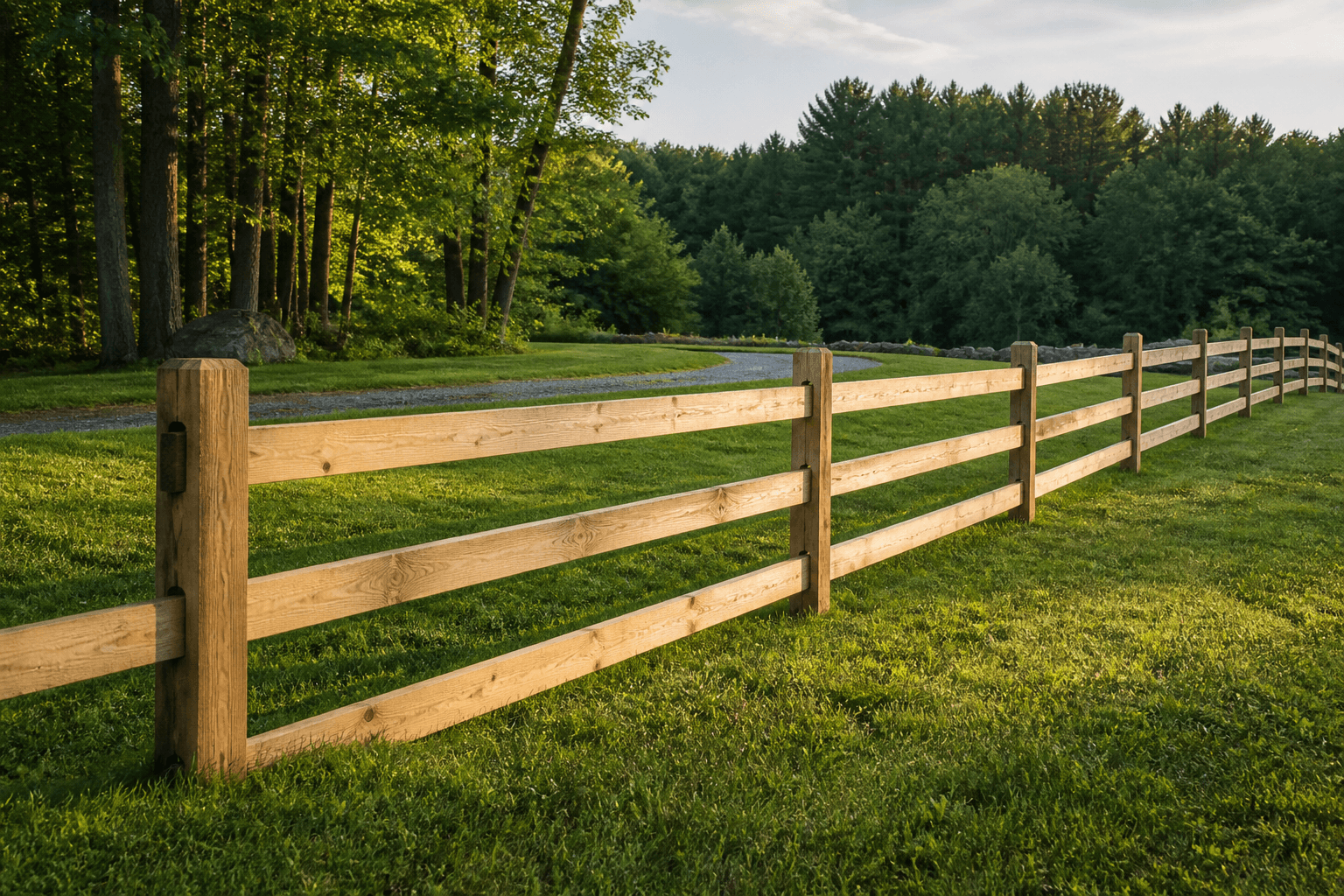
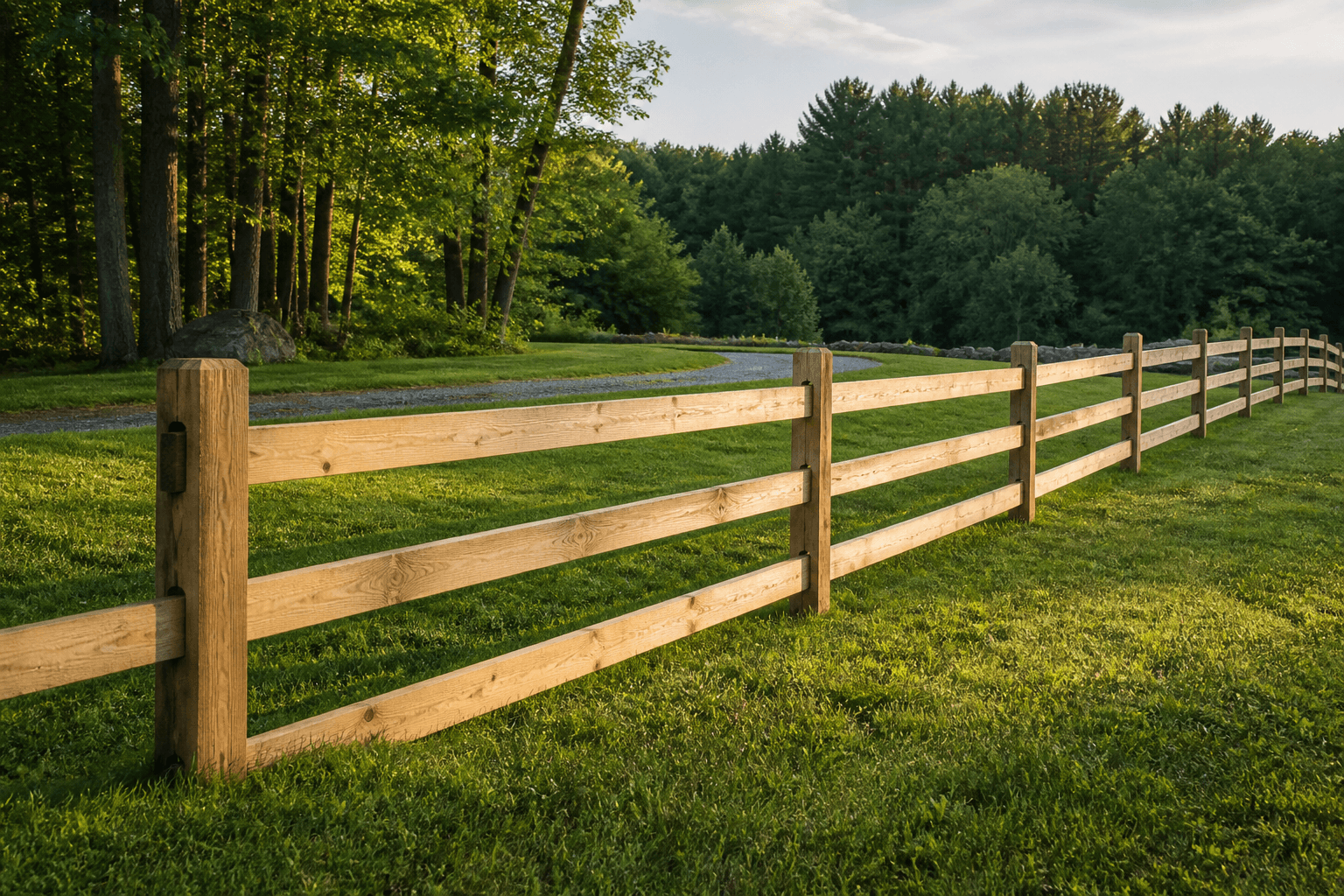
Heavy posts carrying two, three, or four rails with nothing in between, for acreage, a gravel drive, or a wooded lot where you want the property line marked and the view kept. Add welded wire behind the rails and it will hold a dog.
Let's Get Started On Your Fence Project...
The material read
Rails are the longest single pieces in any wood fence, so species matters more than usual. Cedar and locust rails hold a span without sagging; pressure-treated pine bows sooner on 10 ft bays. Posts carry no panel and almost no wind load, which makes this the wood fence least troubled by nor'easters. Frost heave still applies, and a popped post shows.
Heavy posts and two to four horizontal rails, nothing between them. An open wood fence for acreage, driveways, and wooded lots. Add welded wire behind the rails when a dog has to stay in.
The decision guide
See where post and rail fits your property, your budget, and the upkeep you want.
Estimated cost
$9–$18
Per linear foot installed
Estimated installed range for planning. Rail count, post spacing, gates, total footage, and ground conditions shape the installed price.
Site planning
Dimensions, posts, local rules, and site conditions shape the plan for your fence.
Two rails reads paddock, three or four reads estate. Include rail count and height in the quote.
Bay width follows the rail length you buy. Posts are often tamped in gravel, taking little lateral load.
The standard way to make a rail fence hold pets or keep deer out.
FAQ
Use $9 to $18 per installed linear foot as a planning estimate. Rail count, post spacing, gates, total footage, and ground conditions shape the installed price. Request a written quote for your fence and site.
Not on its own. The gaps between rails are wide enough for almost any dog to walk through. Adding black welded wire on the inside face solves it and stays nearly invisible from a distance. If containment is the goal, plan the wire in from the start.
Split rail uses rough riven rails set into drilled posts, giving a rustic, irregular line. Post and rail uses milled, uniform rails that sit flatter and read more finished. Split rail costs less and suits woods and fields; post and rail suits a maintained lawn.
Less than any other wood fence. Most owners let cedar or locust weather to gray and never touch it, which is part of the appeal. Sealing extends life and holds color, but with no panel trapping moisture, an unfinished rail fence still runs twenty years or more.
Keep comparing
See how cost, upkeep, privacy, and lifespan compare. Set what matters most and the table sorts to it.
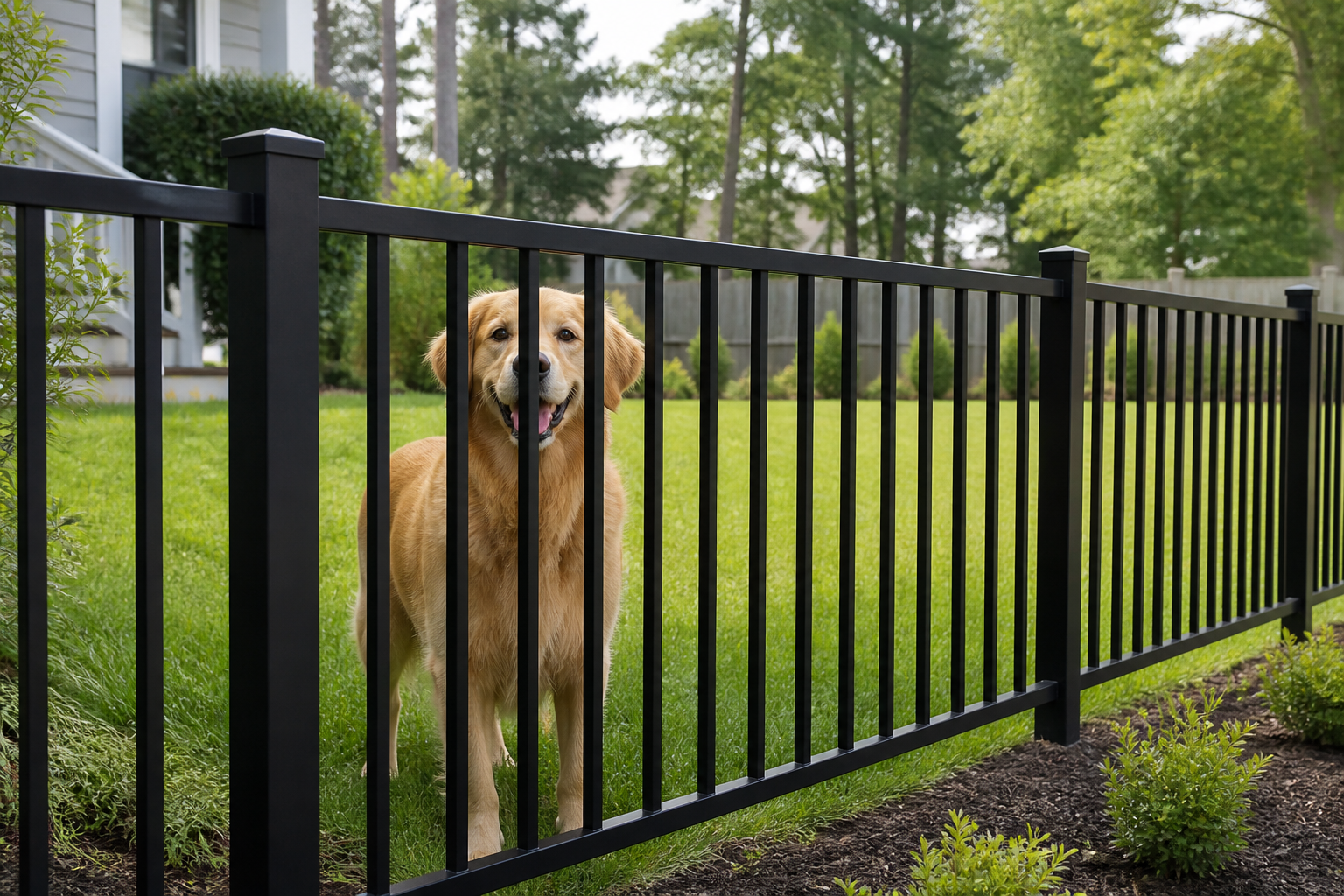
You need to actually contain a dog and want the mesh engineered in from the start
Compare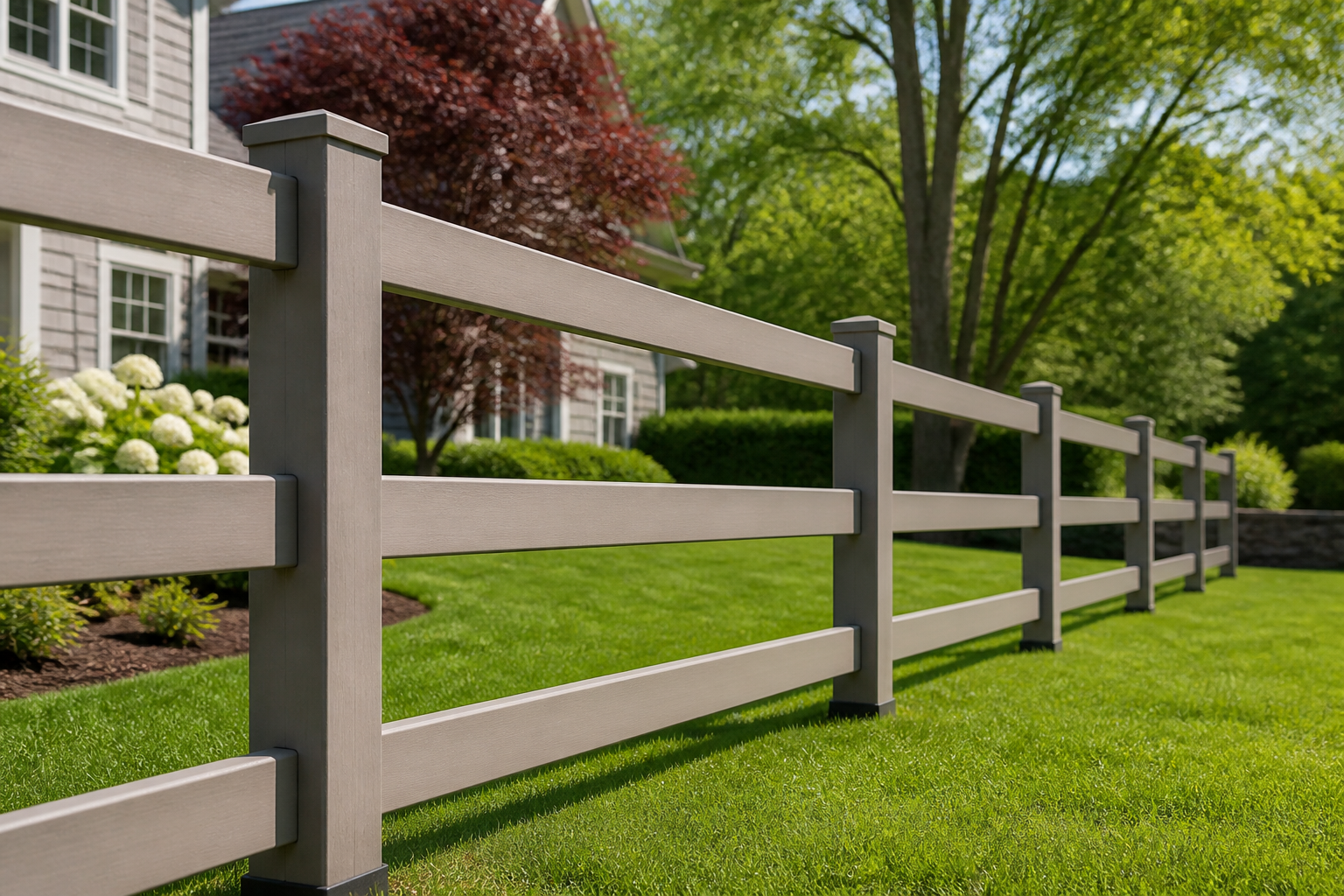
You like the horizontal look but never want to re-stain a long run of rails
Compare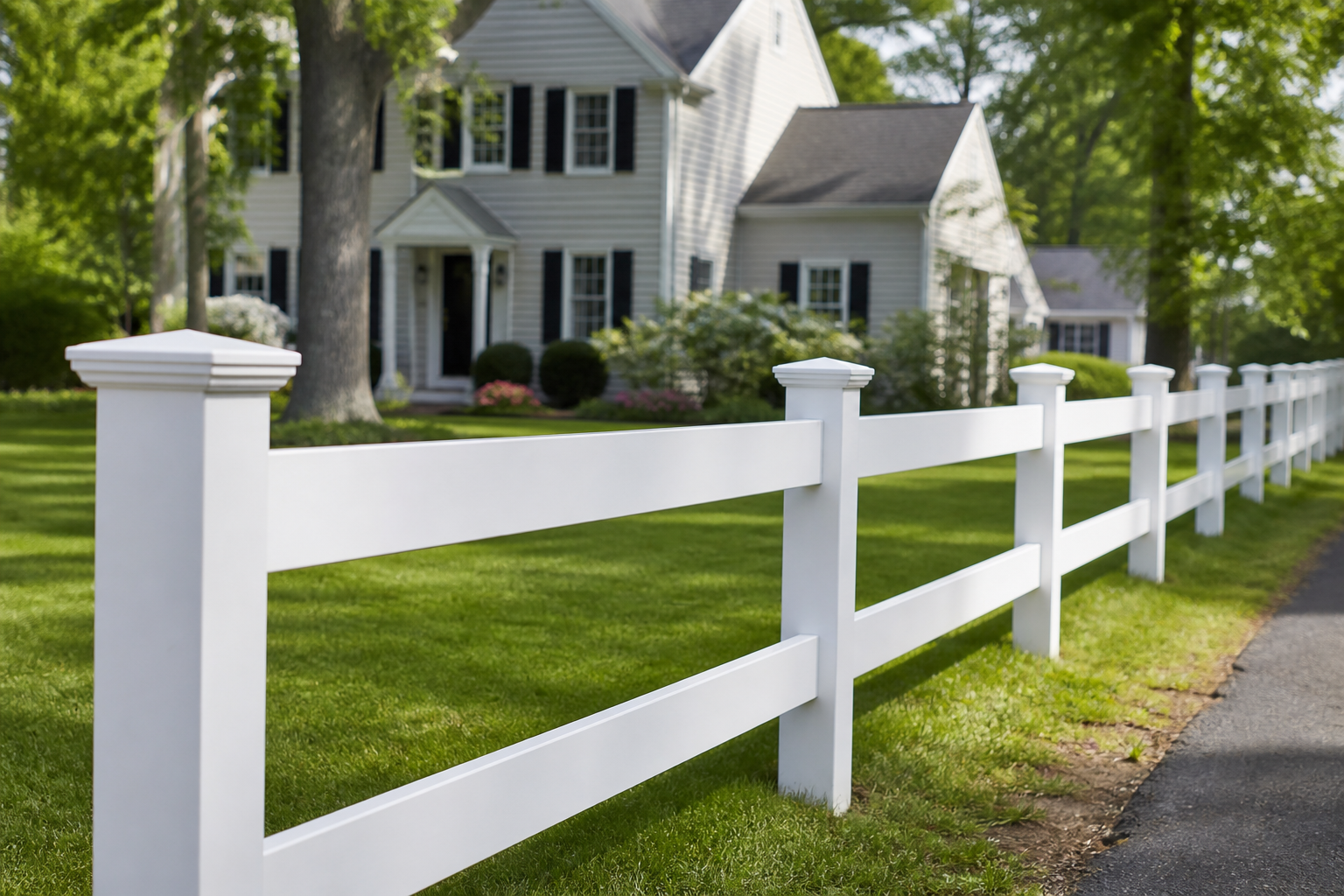
You want the same open style in a low-maintenance white that stays white
Compare| pet fencingAny material | Request an estimate | 20–30 yrs | Low | None | Medium | High | Yes | No |
|---|---|---|---|---|---|---|---|---|
| composite railComposite | Request an estimate | 25–40 yrs | Low | None | Low | High | No | No |
| vinyl railVinyl | $11–$21/ft installed | 20–35 yrs | Low | None | Low | High | No | No |
| pet fencingAny material | composite railComposite | vinyl railVinyl | |
|---|---|---|---|
| Cost | Request an estimate | Request an estimate | $11–$21/ft installed |
| Lifespan | 20–30 yrs | 25–40 yrs | 20–35 yrs |
| Upkeep | Low | Low | Low |
| Privacy | None | None | None |
| Security | Medium | Low | Low |
| Wind | High | High | High |
| Pets | Yes | No | No |
| Pool code | No | No | No |