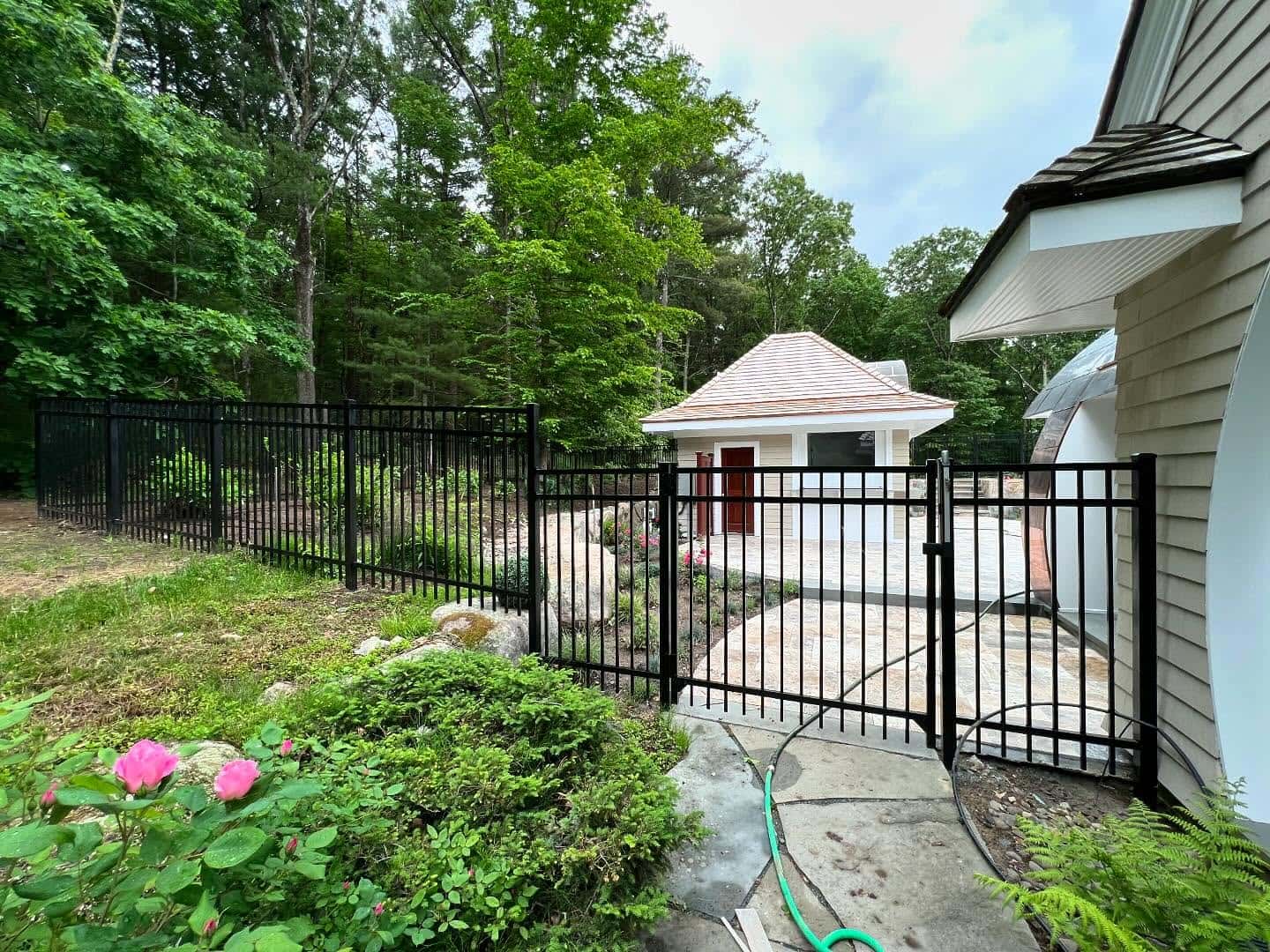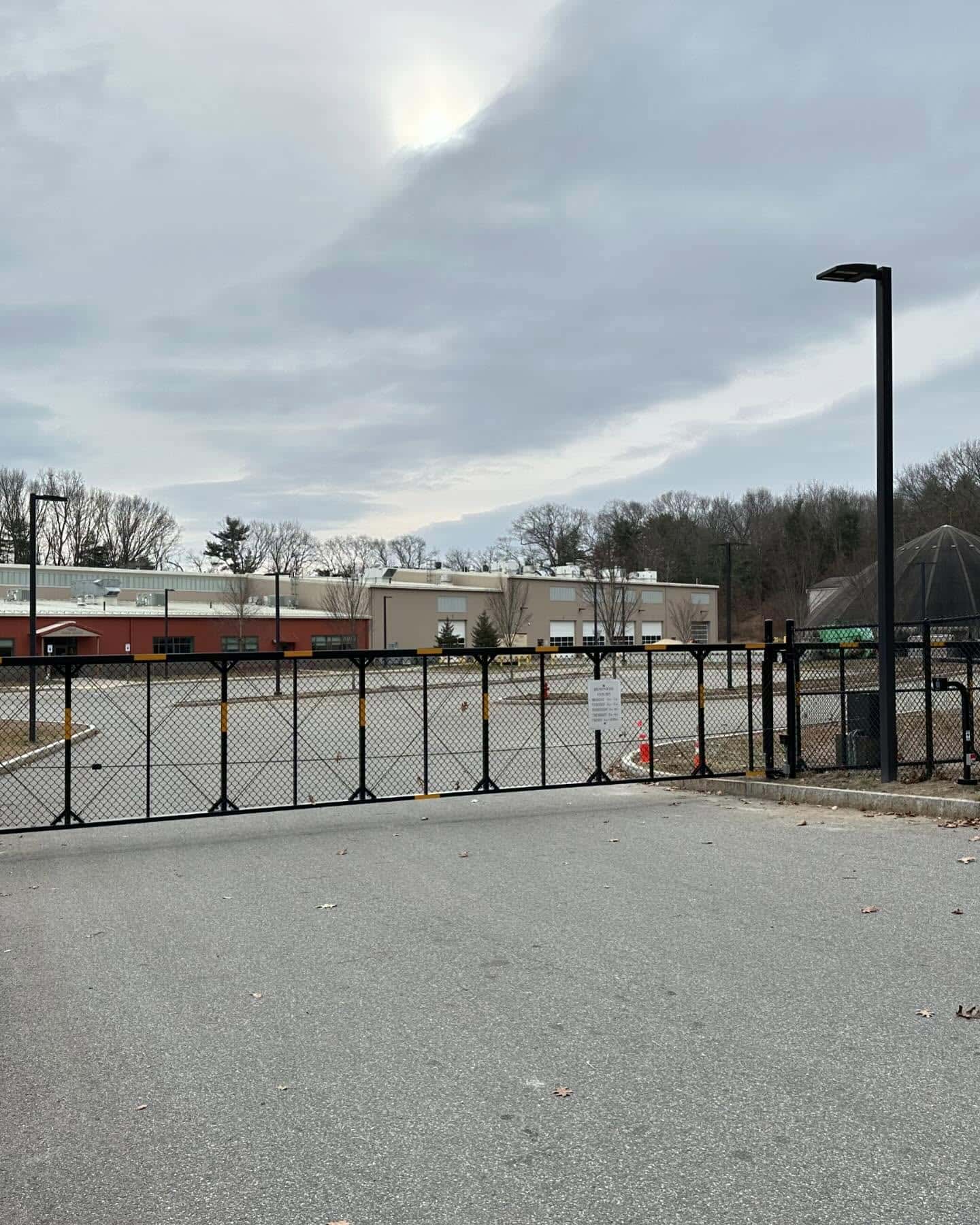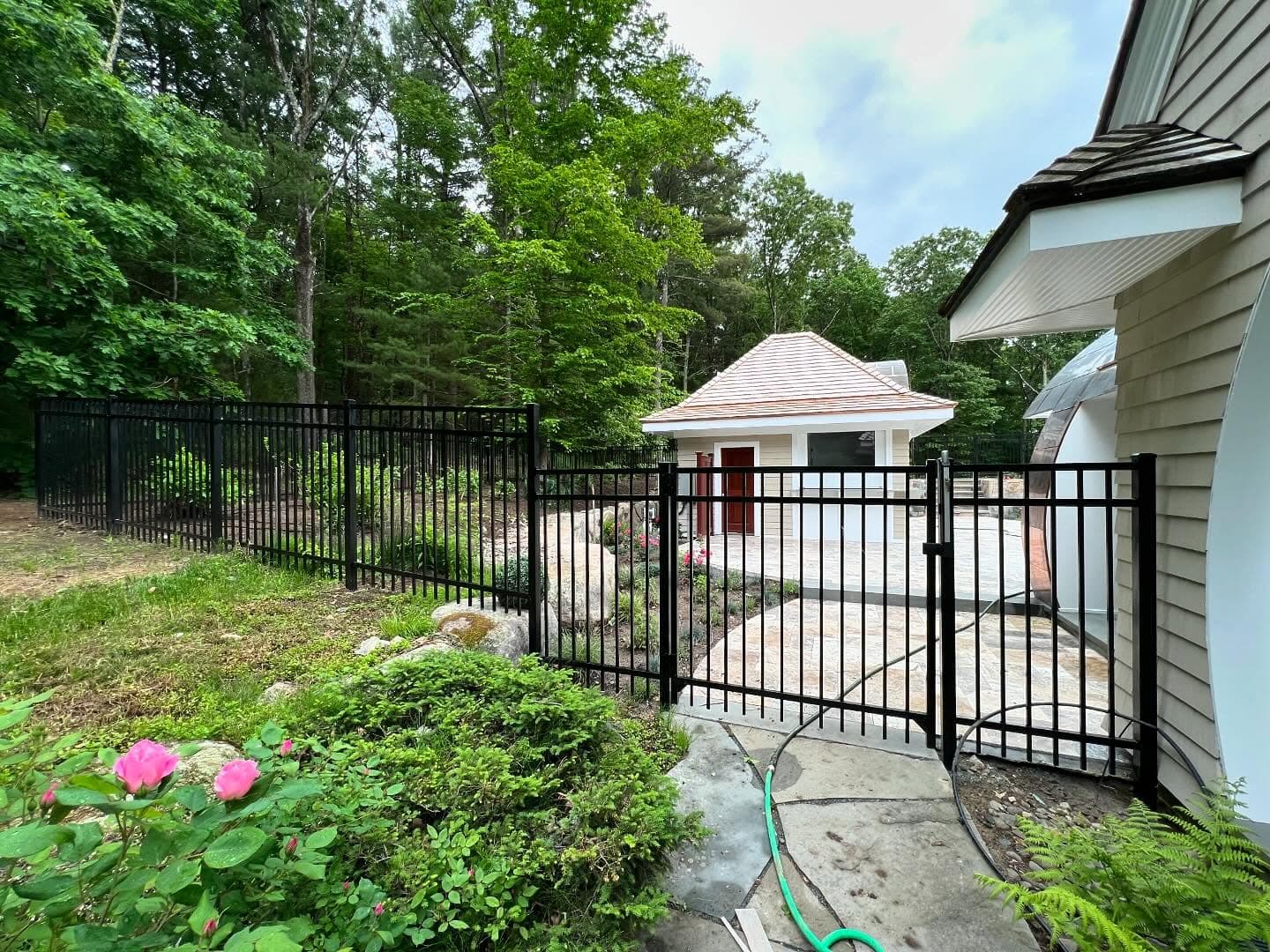
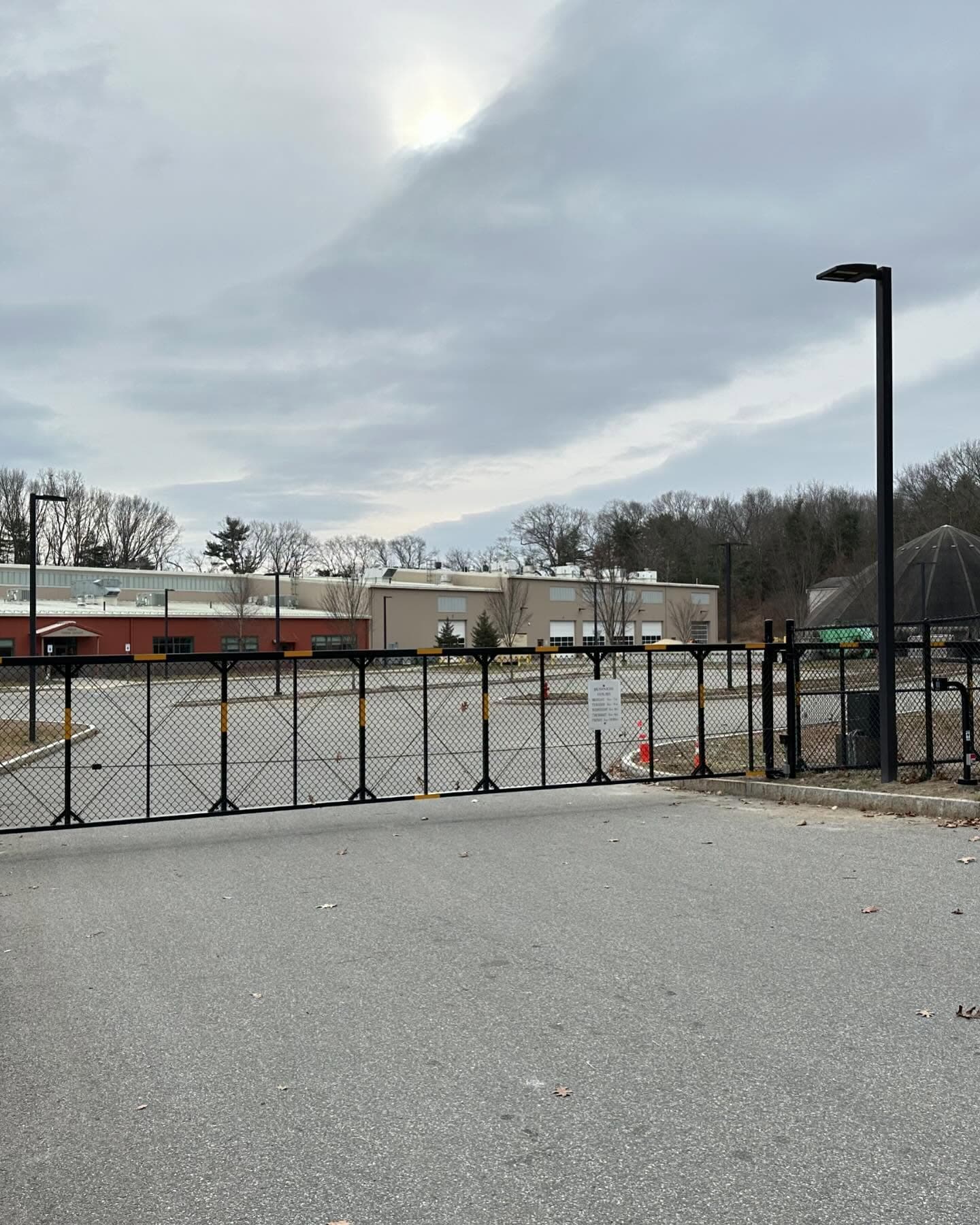
Swing, slide, and cantilever gates for cars and trucks, matched to how much room you have and how the ground sits.
Open it from the truck. Close it behind you.
Gates, automation, and access control, built to the safety standard and sized to the opening.
Let's Get Started On Your Fence Project...
The work
An automated gate is a machine that moves a few hundred pounds of steel across your driveway. There is a national safety standard written for exactly that, UL 325, and it calls for entrapment protection: sensors that stop the gate and reverse it before it can pin a person or a vehicle. A listed operator will not even run until those sensors are wired in each direction the gate travels.
We build to that standard, and we build the gate to match it. The operator gets sized to the real weight and length of the gate, the sensors go where they belong, and the posts are set heavy enough to carry the swing for years.
What we build
Every estimate is set to your property, but this is the shape of the work.
Swing, slide, and cantilever gates for cars and trucks, matched to how much room you have and how the ground sits.
Pedestrian gates for the yard, the pool, and the side path, hung to self-close and latch on their own where the use calls for it.
Operators that open the gate from a remote, a phone, or a keypad, with the safety sensors UL 325 requires wired in.
Keypads and codes, card and fob readers, intercoms with a call button, and license-plate readers that open the gate for a known vehicle.
Rehang a sagging gate, rebuild a failed frame, or add an operator and access control to a gate you already have.
How we work
The same order of operations on every job, so nothing gets undone later.
We measure the width, look at the slope and how much room there is to swing or slide, and ask how you want to get in: a remote in the truck, a code for the kids, a call button for visitors. From there we pick the gate and the operator, size the motor to the weight it carries and how often it will cycle, and set the hinge or roller posts deep enough to hold it. When the gate is automated, the safety sensors go in and get tested before we call the job done.
Why AnyFence
An automated gate we install carries the UL 325 entrapment sensors, monitored and set in both directions, so it stops and reverses instead of closing on someone.
A cantilever gate rides on rollers beside the opening and floats above the ground, so there is no track to pack with snow, ice, or dirt and jam the gate shut.
We match the motor to the gate's real weight, length, and daily cycles. An undersized operator burns out early; a right-sized one keeps opening.
A gate hangs off one side, and its own weight works to pull the latch corner down. Hung on an oversized post and braced across the frame, it keeps swinging true and latching.
From our work portfolio
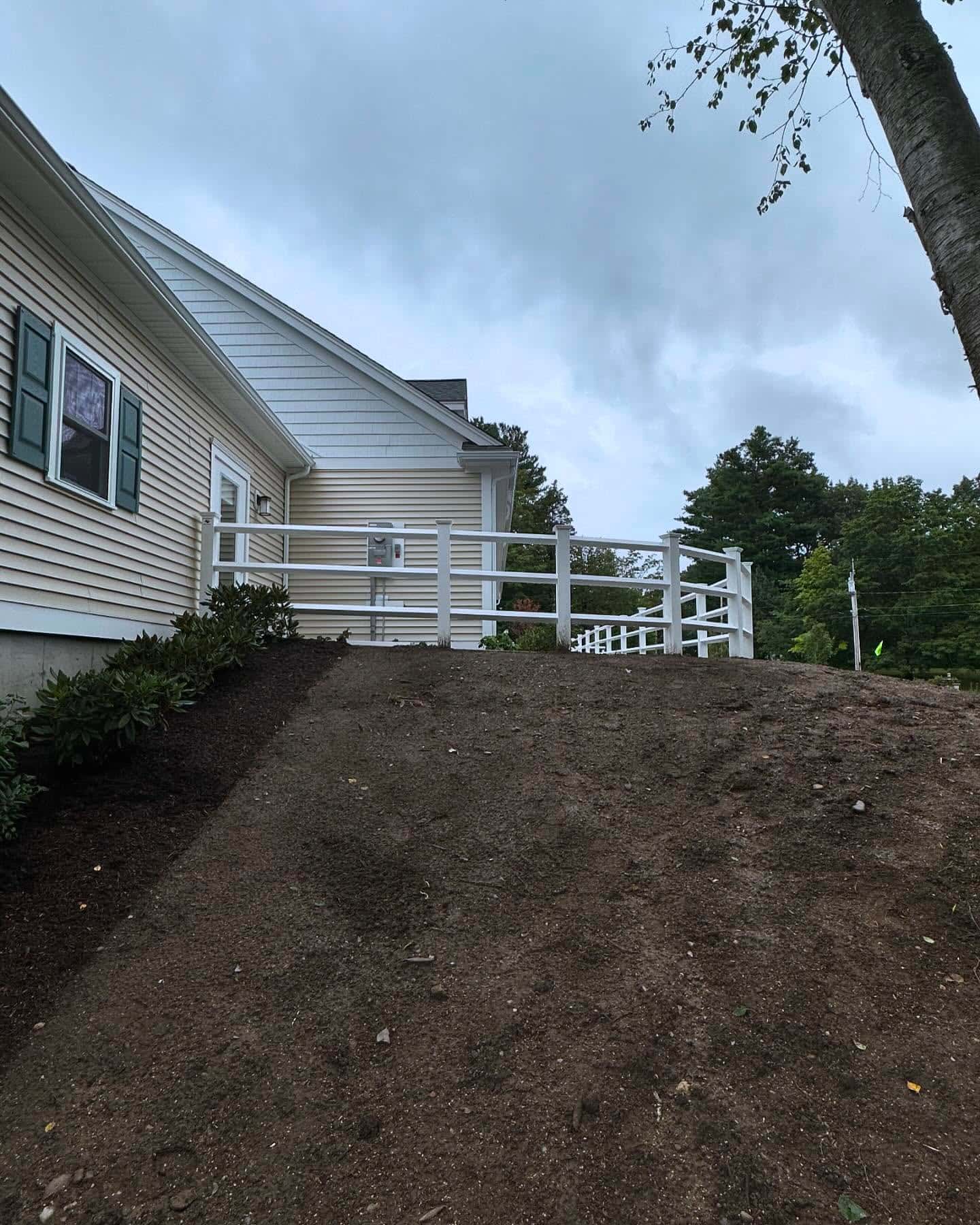
Different yards, grades, gates, and property lines, built by AnyFence crews.
Materials
These are the materials for this service. Pick by look, upkeep, and budget, or let us recommend on the site walk.
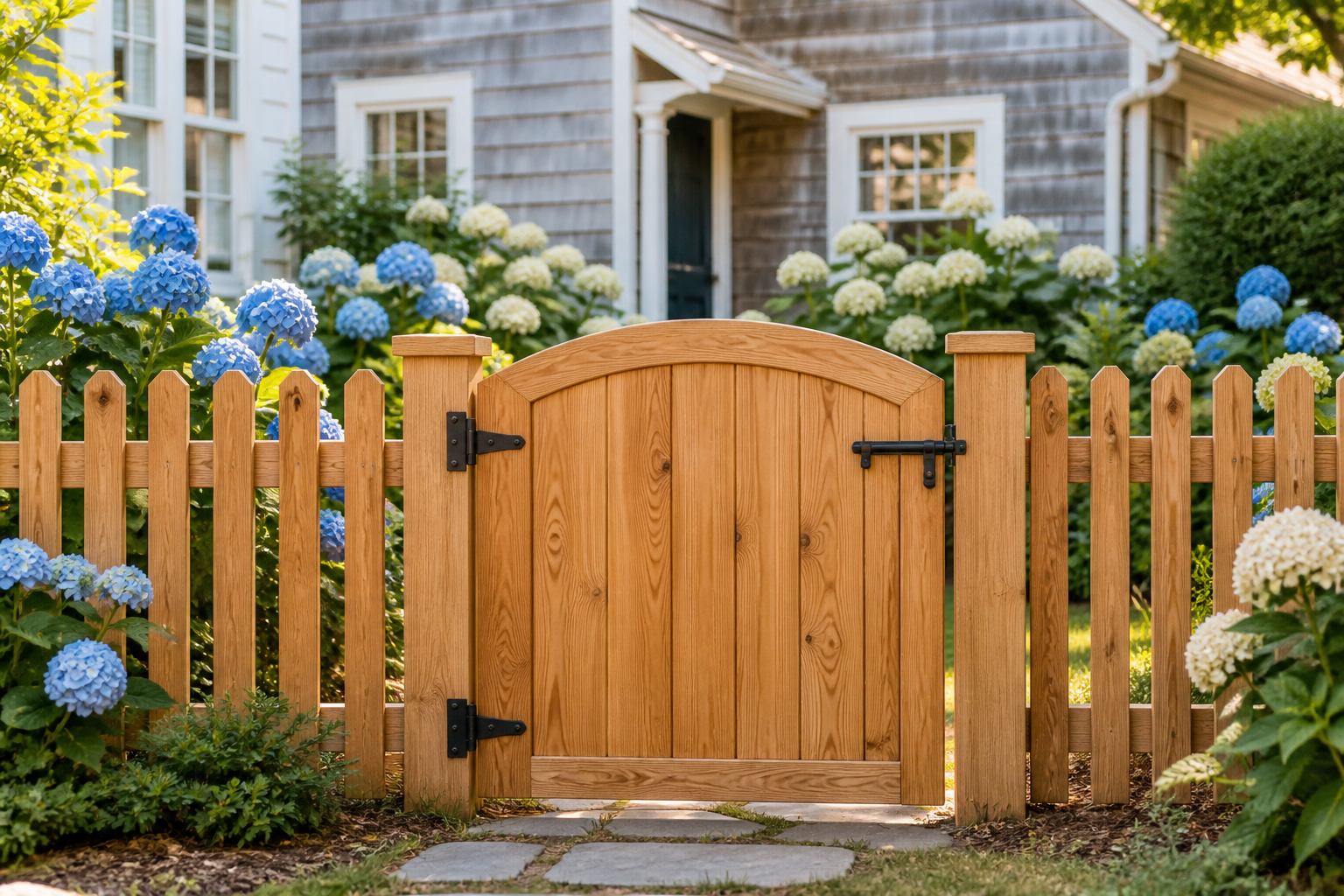 Fence GatesWalk and manual driveway gates are priced per opening. Estimate $50 to $463 per basic walk gate installed, or $400 to $3,471 per manual driveway opening. Request a quote for the size, posts and hardware.
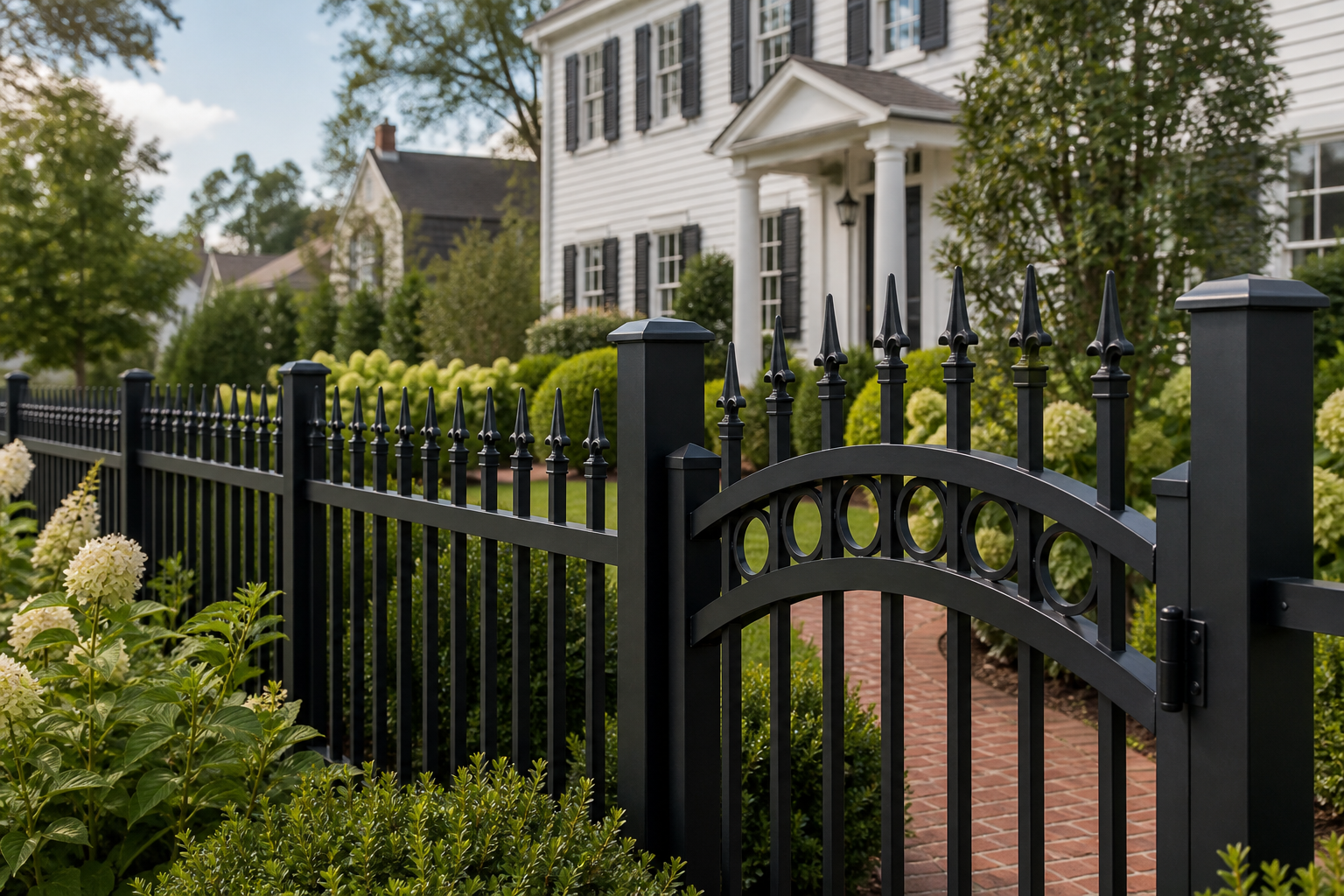 Aluminum FencesThe rust-proof ornamental fence. Aluminum panels rack to follow a sloped yard, arrive powder-coated in black or bronze, and meet Massachusetts pool barrier code at 4 ft with self-closing hardware. Runs $28 to $134 per foot installed.
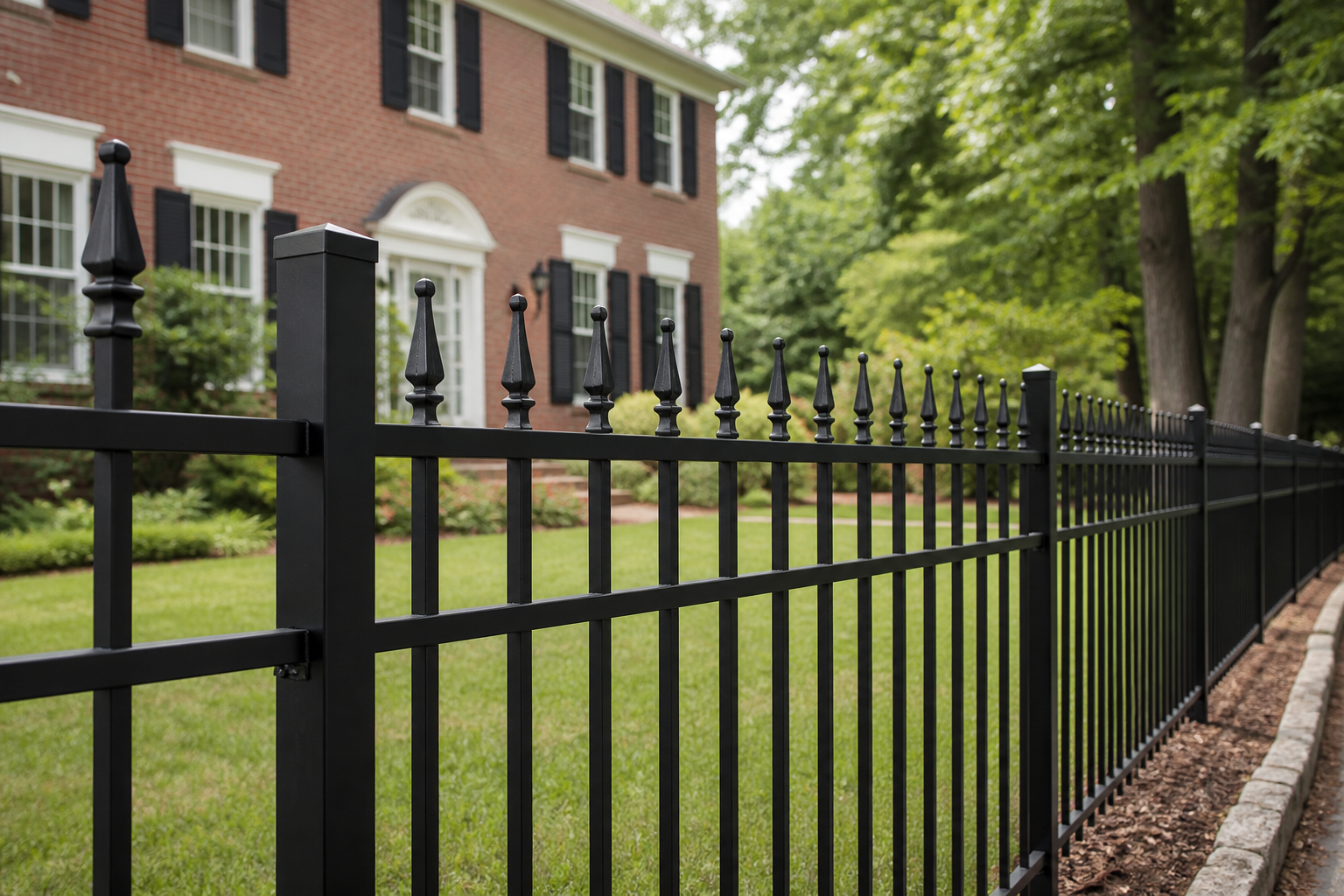 Metal FencesMetal fencing includes chain link and custom ornamental iron. It never rots or warps, it lets snow pass through open pickets, and posts set below the frost line hold their line for decades. Start here to find which metal fits the job.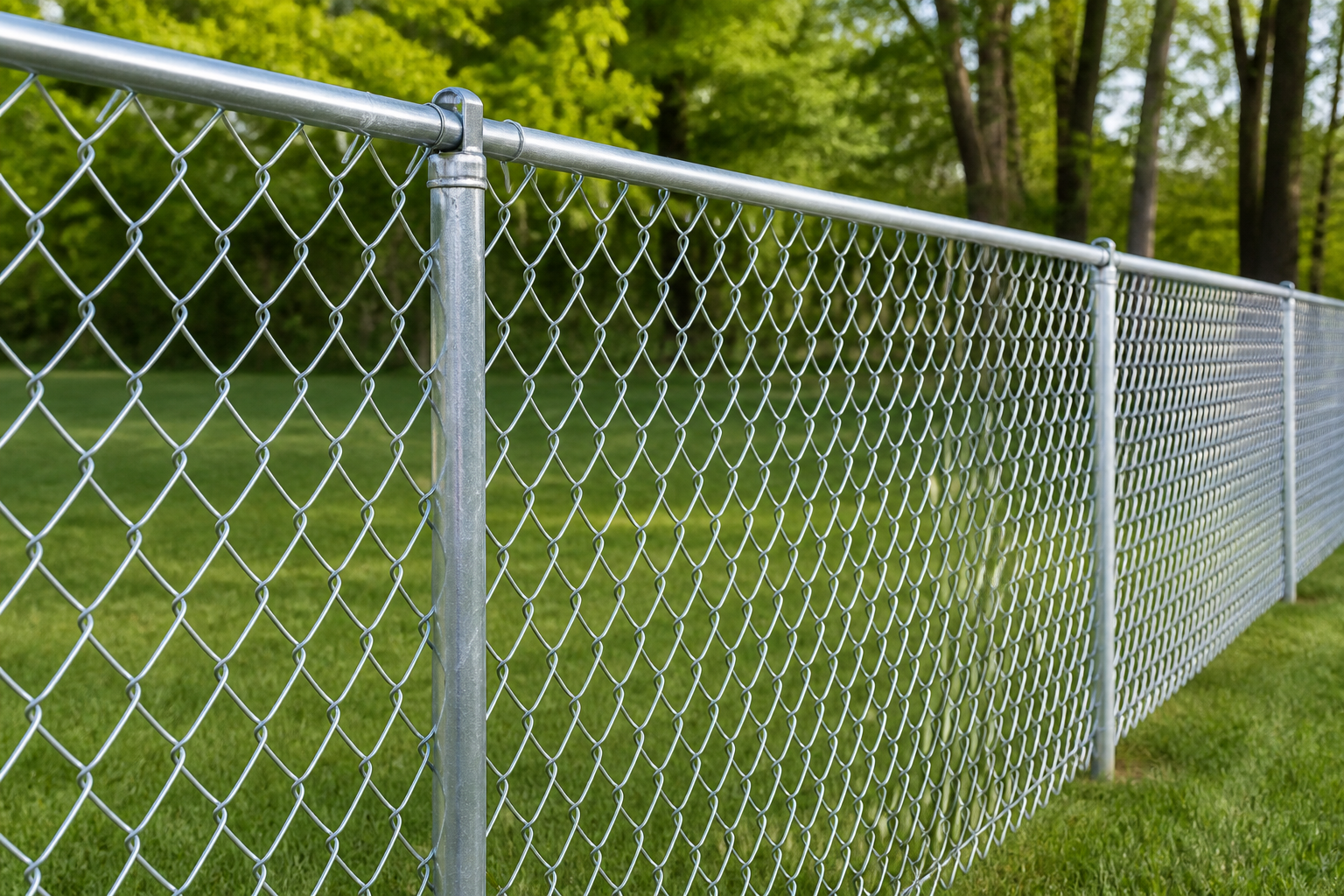
FAQ
They are when they are built to UL 325, the safety standard for gate operators. It requires entrapment protection: photo-beams and contact edges that sense a person or a vehicle in the way and stop and reverse the gate. A listed operator will not run until those sensors are installed in each direction the gate moves. We wire and test them on every automated gate.
It comes down to room and ground. A swing gate needs clear space for the gate to arc open. A slide gate works where there is no room to swing, but a rolling gate runs on a ground track that snow, ice, and dirt can pack. A cantilever gate slides with no track at all, riding on rollers beside the opening, which is why it holds up on longer openings and through New England winters.
Often, yes. If the frame is square and the posts are solid, we can add an operator and access control to it. If the gate already sags or the posts are undersized for a motor, we sort that out first, since an operator only cycles a weak gate to failure faster.
Whatever fits how you live. A remote in the vehicle, a keypad code for family and staff, a card or fob, an intercom with a call button for visitors, or a license-plate reader that opens for a vehicle it knows. We can combine them, so residents drive up and open it while a guest presses a button.
Leverage. The gate hangs off the hinge side, and its own weight is always working to drop the far corner. When the latch corner falls even a little, the gate drags and the latch misses. The fix is an oversized hinge post set deep and a brace run across the frame, so the load has somewhere to go.
Power at the gate for the operator, and a spot for the keypad or reader you choose. We plan the runs as part of the layout so the gate opens the day it goes in. The building code exempts fences up to seven feet from a building permit, and towns often zone lower, so we check your town before we quote.